

Your Professional Architectural Aluminium Profile Supplier
With strict international standards, military quality, excellent brand image and systematic solutions, Jinchang Aluminum has won a benchmark image in the field of aluminium profiles.I firmly believe that as long as all of us at jinchang work diligently, study tirelessly, think unconventionally, create with all our heart and soul, face challenges and work bravely, we will be able to build Jinchang into a world-class technology innovation enterprise. For this reason, we are as hopeful and confident as you are about the future.
Why Choose Us
Our Factory
Shandong Jinchang Aluminum Industry Co., Ltd. A number of internationally advanced aluminium profile production lines have been built, with an annual production capacity of 200,000 tonnes.
Advanced Equipment
Jinchang Aluminium is equipped with large automatic vertical oxidation and electrophoresis lines in Asia, fully automatic vertical storage and other intelligent production systems for industrial lightweight development.
Our Certificate
We are certificated by ISO 9001: 2008, factory is reliable and quality is guaranteed.
Our Service
Our team of experienced engineers and dedicated support staff are committed to delivering excellent after-sales service.


Specifications of Architectural Aluminium Profile
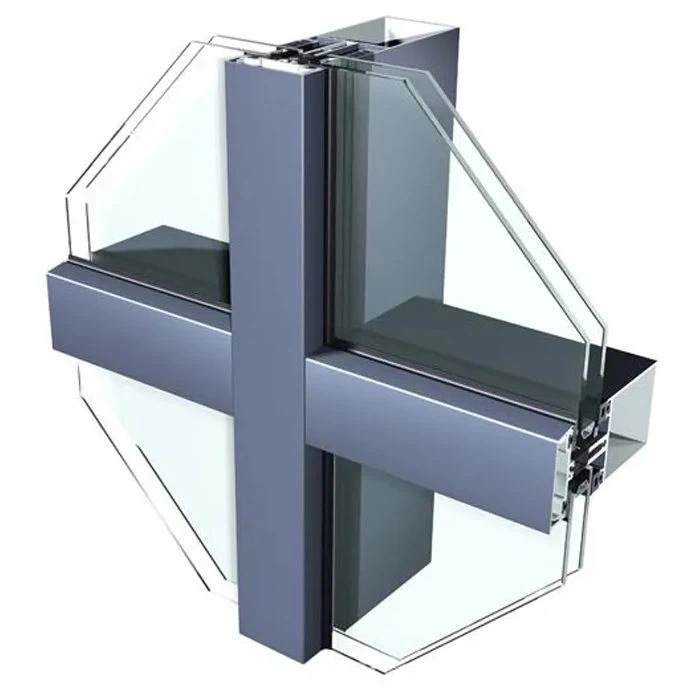
Light weight: Aluminium profiles provide energy efficiency and easy installation with their light weight.
Corrosion Resistance: They are highly resistant to corrosion (rusting) and long lasting.
High Strength: They are safe in all seasons with their high strength superiority.
Flexibility: They have the ability to transform into different shapes and sizes.
Heat and Electricity Conductivity: They conduct electricity and heat in good quality.
Ease of Surface Treatment: They can be coated with different surface treatments such as painting and powder coating.
Easy Machinability: They include facilities such as welding, bending, drilling and cutting.
Heat and Sound Insulation: They can be specially designed for energy efficiency.
Durability: They can be used for years, have low maintenance and reduce costs.
Integrated Features: They offer the opportunity to obtain profiles with alternative functions.
Sustainability: Environmentally friendly materials that can be recycled many times without loss of quality.

Types of Architectural Aluminium Profiles
Standard Profiles
Commonly used for general construction, these are widely available and cost-effective.
Custom Profiles
Tailored to unique architectural designs, allowing for personalized shapes and sizes based on project needs.
Thermal Break Profiles
Designed to reduce heat transfer, these profiles enhance energy efficiency in buildings.
Decorative Profiles
Featuring intricate designs, these profiles enhance aesthetics while complementing architectural styles.
Applications of Architectural Aluminium Profiles
Construction Industry
Facade claddings, door and window systems, solar panels, bridges, stadiums, multi-storey buildings, etc.
Automotive Industry
Cooling systems, vehicle chassis, interior details, etc.
Electric-Electronics
As coolant, solar energy systems, etc.
Customized Process Of Architectural Aluminium Profile
Determine the needs: First, you need to determine what type of custom aluminum profile products you need. You need to consider factors such as material type, size, thickness, shape, and surface treatment. Therefore, you need to consider the design and specifications of the product, which means that you need to accurately measure and draw product drawings to ensure that the manufactured aluminum profiles meet your requirements.
Cutting aluminum profiles: The first step in aluminum profile processing is to measure and cut the raw materials. Aluminum profiles can be cut with manual or automatic cutting machines, and manual cutting tools such as wood saws and hacksaws can also be used. When cutting, you need to ensure that the size, length, and angle are accurate, and you need to follow safe operating procedures.
Processing aluminum profiles: Once the aluminum profiles are cut to the required size, they need to be processed so that they can be processed into the required shape and size. The methods of aluminum profile processing include stamping, drilling, shearing, folding, welding and cutting. The processing process requires strict calculation and strict quality control.
Surface treatment: Aluminum profiles also need to be surface treated when they are processed and customized. The surface can be treated by grinding, anodizing, electroplating and other methods to enhance the corrosion resistance and surface appearance of the material.
Assemble the product: Finally, according to the design of the product, the required aluminum profile parts will be assembled to form the desired final product. The assembly needs to follow the design drawings and ensure that the parts of the aluminum profile are tightly connected to ensure the quality and stability of the product.
Service

01
Free sample, Free design.

02
OEM/ODM available.

03
Custom-made request.

04
New design solution suggestion.
FAQ
As one of the leading architectural aluminium profile manufacturers and suppliers in China, we warmly welcome you to buy high quality architectural aluminium profile for sale here from our factory. For customized service, contact us now.
, architectural aluminium profile